

Does 512(f) Apply Differently to Counternotices Compared to Takedown Notices?
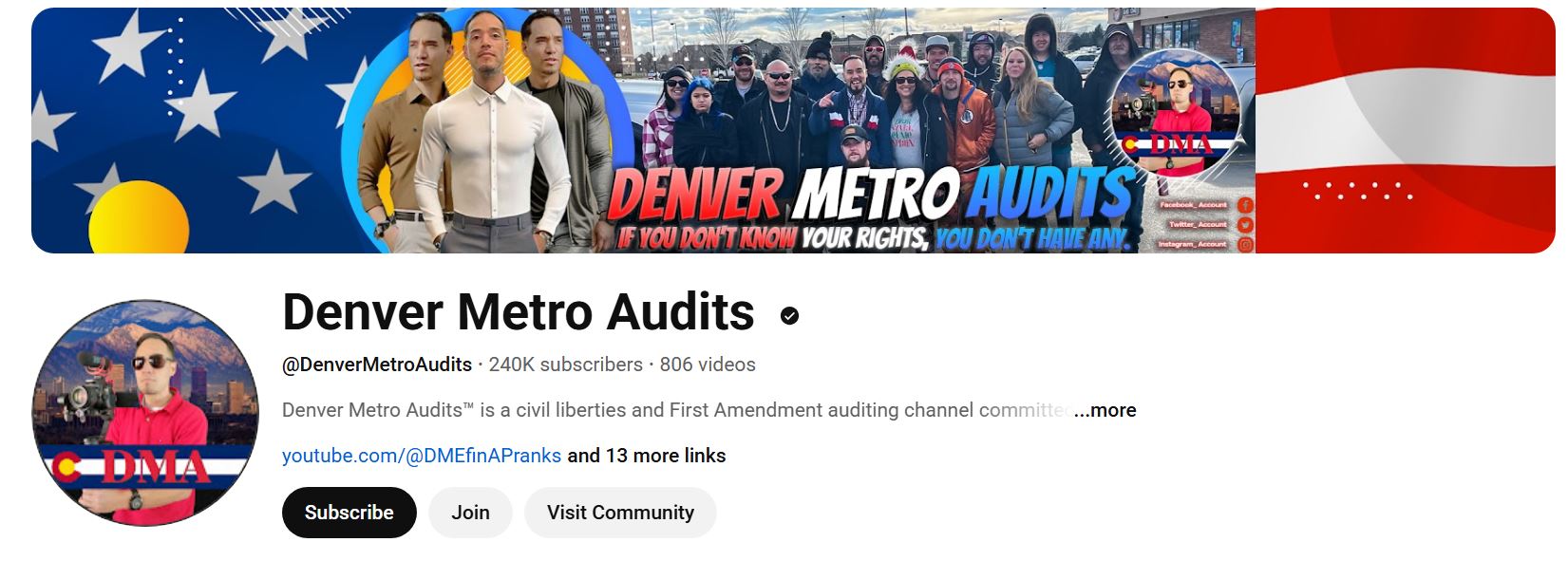
“Plaintiff is the sole owner of the copyrights in the videos published on the YouTube channels ‘Denver Metro Audits’ and ‘Denver Metro Audits 2.0.'” This is my second time blogging about those channels.

The plaintiff sent takedown notices targeting 27 of The Exposer’s videos. YouTube removed 17 videos. (The Exposer made 13 of the 14 other videos private). Allegedly, “At least eight of the 17 videos contained no commentary of any kind.” Rapkin, representing The Exposer, filed counternotifications for the 17 removed videos, allegedly without actually reviewing the videos. The plaintiff filed a copyright infringement lawsuit to block YouTube’s reinstatement of the counternoticed videos. The plaintiff also claims Rapkin’s counternotices violated 512(f). The court denied Rapkin’s motion to dismiss.
Damages
Rapkin argued that the plaintiff didn’t suffer any damages if YouTube never reinstated the videos. The court says the threat of reinstatement is good enough to support 512(f) damages. The court distinguishes Amaretto v. Ozimals, the old virtual horses v. bunnies case:
Amaretto limited liability to misrepresentations in a takedown notice that led to an actual takedown of a video, not to misrepresentations in a counter notification that led to reinstatement. This distinction is important because takedown notices prompt the service provider to “expeditiously … remove” the material, while counter notifications force the user into time-sensitive litigation to prevent reinstatement
Is there really a material difference between takedown notices and counternotices? Takedown notices have major implications. The legal incentives impel services to remove the content, the removal occurs without any warning to the uploader, and the uploader may have to go to court to rectify the removal. (Services aren’t legally compelled to honor 512(g) counternotifications). So both takedown notices and counternotices are powerful legal tools that (by design) cause the disposition of important legal rights extrajudicially. It would have been helpful for the court to articulate a more detailed explanation about why the shifted leverage from a counternotice is more significant than the shifted leverage from the initial takedown notice, and why that should matter to the 512(f) analysis. This might be a good student paper topic.
Knowing Misrepresentation
512(f) requires that the takedown/counter notice sender has “knowledge” that the notice contains a material misrepresentation. For over 20 years, courts have applied that scienter standard exactingly. Per Rossi, actual knowledge was required, and it was measured subjectively. Increasingly, courts have been open to loosening that subjective standard to include “willful blindness.” That leads to passages like this:
Plaintiff alleges that Rapkin withheld the Exposer’s identity and that the Exposer “publicly boasted about hiding behind Attorney Rapkin and a purported corporate entity to evade accountability, taunting Plaintiff that his identity would never be discovered and he therefore could not be held liable.” Drawing all reasonable inferences in favor of Plaintiff, these allegations support a reasonable inference that Rapkin knew that the Exposer’s subject videos did not contain commentary and was therefore not subject to fair use. Further, Plaintiff sufficiently alleged that Rapkin took deliberate actions to avoid confirming that the subject videos did not contain commentary by not reviewing the videos.
And this is how this 512(f) case survives a motion to dismiss.
Yet, copyright owners send enormous volumes of robo-takedown notices all the time without actually reviewing the subject works, and Rossi says their ignorance is not a problem at all. Did the court bend the scienter standard because it was a counternotification?
The court doesn’t address the problems with potentially imposing potential 512(f) liability on the uploader’s attorney instead of exclusively on the uploader. Among other things, this potentially turns attorney-client communications into discoverable evidence. On the other hand, anyone sending a takedown or putback notice should be doing their homework before submitting the notice! If collapsing the identity of the notice sender means that more copyright enforcement agents/lawyers fear their personal legal liability when zinging 512(c)(3) takedown notices around the Internet on behalf of clients, so be it.
And yet, as I wrote about in my first-hand interactions with Scribd’s defective DMCA procedures, it’s stressful to submit a 512(g) putback notice. In doing so, the submitter must accept jurisdiction in a potentially unfriendly venue, dares the takedown notice sender to initiate a copyright infringement lawsuit (to veto reinstatement), and invites a 512(f) lawsuit–per this case, potentially with a higher risk of 512(f) liability than the initial takedown notice sender faced. I was so confident in my Scribd upload that I submitted the 512(g) putback notice anyway. However, most people who understand the risks of putback notices might rationally acquiesce to bogus takedowns to reduce their legal exposure. This is another example of how 512(c)’s notice-and-takedown mechanisms may not be properly fine-tuned to reflect the power dynamics.
Doeman Music Group Media and Photography LLC v. George, 2026 WL 789495 (S.D.N.Y. Jan. 8, 2026). The complaint.
This is a default judgment, which is the primary way that plaintiffs win 512(f) cases. Even so, this plaintiff blows the layup and gets a small fraction of its requested relief.
[Note: this is a magistrate judge’s recommendation, but because the plaintiff delayed serving it on the defendant, the supervising judge has not yet reviewed it.]
I previously summarized this case:
The case involves George’s 3 second vocal contribution to a song. George was paid for her contribution, got named in the song credits, and allegedly operated under the direction of the song creator (but apparently without a license?). George later demanded that her name be removed from the credits. When rebuffed, George sent takedown notices to various services, claiming copyright ownership of the song. (Wow, this is a deja vu of Innocence of Muslims). The record label sued George for 512(f).
In my prior post, I raised questions about whether George ever got properly served. Inadequate service may be a contributing factor to the default judgment.
Much of the most recent opinion explains how the plaintiff made unsupported evidentiary claims about its damages. The court awards $360.63 of lost streaming revenue from the takedown, calculated as:
(Plaintiff’s total [Spotify] streams to date on a comparable song less Scary Movie’s total streams to date) * (an estimated $0.0018849628 per stream) = $160.63. Plaintiff said that if one considers other streaming platforms, the additional lost streaming revenue for Scary Movie would be $200.00
The calculation is precise to the penny on the lost Spotify revenues from the song, even though the formula is based on streams for a “comparable song” (whatever that means). Yet, the other platforms’ lost revenue is just a round $200 with no supporting data at all. The court lets that obvious discrepancy go.
[The calculation that Spotify pays $0.0018849628 per stream seemed a little low and obviously implied faux precise (accurate to 10 digits????)].
The plaintiff also sought lost live performance bookings ($20k) and his costs of reuploading the songs (allegedly 250 hours at $130/hr). The court refuses both requests because they conflate the identity between the artist and the label.
The court awards the following costs:
- $2,500.00 in out-of-pocket fees paid to DMCA counsel
- $400.00 in pre-filing services in connection with George’s Take-Down ($150.00 “for assistance with effectuating a counternotice” to George’s Take-Downs and $250.00 to consult “another private attorney” about George’s Take-Downs <== both of these sounded a little fishy)
- $1,202.00 in taxable costs ($800 process server and $402 complaint filing fee)
The plaintiff then requested over $57k of attorneys’ fees: “Grimm billed 52.4 hours on this case at an hourly rate of $450; Keenen billed 72.9 hours of work on this case at an hourly rate of $400.” The court haircut the billable rates to $400 for Grimm and $300 for Keenan and haircut the hours to 42.5 total to exclude time spent working on other defendants.
In total, the court awards about $19k: $14.6k of attorneys’ fees, $4.1k of costs, and the remainder the lost streaming revenues. Given that the plaintiff made an unopposed ask of about $120k of damages and attorneys’ fees, getting only about 1/6 that amount probably feels a little disappointing and embarrassing. And it’s also likely the $19k is uncollectible. Still, a 512(f) damages award of any amount, even in a default judgment, is a rare outcome, so…good job I guess?
BONUS: Pandvil LLC v. Pino, 2026 WL 820817 (D. Ariz. March 25, 2026). The defendant used 512(c)(3) takedown notices to (improperly) remove a lucrative Fortnite island. In response to the 512(f) claim, the court awards $501k in damages plus $10k fees and costs. This would be a big deal if it weren’t a default judgment where the court accepted the plaintiff’s arguments without challenge.
BONUS 2: Charles F. Wachendorfer Consulting Group LLC v. Think2Perform Exam Services Co., 2026 WL 836902 (D. Minn. March 26, 2026). “Courts have held that tortious-interference claims predicated solely on false DMCA takedown notices are preempted by the DMCA….the heart of Wachendorfer’s claim for tortious interference with economic advantage is the false takedown notice. If the notice has caused injury to Wachendorfer—or if Wachendorfer suffers injury in the future caused by the notice—then Wachendorfer can seek damages and other remedies under the DMCA.”
Prior Posts on Section 512(f)
* It Takes a Lot for 512(f) Claims to Survive a Motion to Dismiss–Cordova v. Huneault
* Copyright Takedown Notices May Be Affecting Your Washing Machine Options–Ningbo Yituo v. GoPlus
* 512(f) Claim Sent to Trial (Which Didn’t Happen)–Leszczynski v. Kitchen Cube
* 512(f) Doesn’t Support Preliminary Injunction–BViral v. TheSoul
* In 512(f), the “F” Stands for “Futility”–Shaffer v. Kavarnos
* Does Anyone Still Care About NFTs? (Yuga Labs, LLC v. Ripps) — Guest Blog Post
* Viral DRM Awarded Damages for Its 512(f) Claims, But At What Cost?
* Big YouTube Channel Gets TRO Against Being Targeted by DMCA Copyright Takedown Notices–Invisible Narratives v. Next Level Apps
* The Competition Between Temu and Shein Moves Into a Courtroom–Whaleco v. Shein
* Copyright Battles Over City Council Videos
* Record Label Sends Bogus Takedown Notice, Defeats 512(f) Claim Anyway–White v. UMG
* Plaintiffs Make Some Progress in 512(f) Cases
* 512(f) Doesn’t Restrict Competitive Gaming of Search Results–Source Capital v. Barrett Financial
* 512(f) Once Again Ensnared in an Employment Ownership Dispute–Shande v. Zoox
* Surprise! Another 512(f) Claim Fails–Bored Ape Yacht Club v. Ripps
* You’re a Fool if You Think You Can Win a 512(f) Case–Security Police and Fire Professionals v. Maritas
* 512(f) Plaintiff Must Pay $91k to the Defense–Digital Marketing v. McCandless
* Anti-Circumvention Takedowns Aren’t Covered by 512(f)–Yout v. RIAA
* 11th Circuit UPHOLDS a 512(f) Plaintiff Win on Appeal–Alper Automotive v. Day to Day Imports
* Court Mistakenly Thinks Copyright Owners Have a Duty to Police Infringement–Sunny Factory v. Chen
* Another 512(f) Claim Fails–Moonbug v. Babybus
* A 512(f) Plaintiff Wins at Trial! 
* Satirical Depiction in YouTube Video Gets Rough Treatment in Court
* 512(f) Preempts Tortious Interference Claim–Copy Me That v. This Old Gal
* 512(f) Claim Against Robo-Notice Sender Can Proceed–Enttech v. Okularity
* Copyright Plaintiffs Can’t Figure Out What Copyrights They Own, Court Says ¯\_(ツ)_/¯
* A 512(f) Case Leads to a Rare Damages Award (on a Default Judgment)–California Beach v. Du
* 512(f) Claim Survives Motion to Dismiss–Brandyn Love v. Nuclear Blast America
* 512(f) Claim Fails in the 11th Circuit–Johnson v. New Destiny Christian Center
* Court Orders Rightsowner to Withdraw DMCA Takedown Notices Sent to Amazon–Beyond Blond v. Heldman
* Another 512(f) Claim Fails–Ningbo Mizhihe v Doe
* Video Excerpts Qualify as Fair Use (and Another 512(f) Claim Fails)–Hughes v. Benjamin
* How Have Section 512(f) Cases Fared Since 2017? (Spoiler: Not Well)
* Another Section 512(f) Case Fails–ISE v. Longarzo
* Another 512(f) Case Fails–Handshoe v. Perret
* A DMCA Section 512(f) Case Survives Dismissal–ISE v. Longarzo
* DMCA’s Unhelpful 512(f) Preempts Helpful State Law Claims–Stevens v. Vodka and Milk
* Section 512(f) Complaint Survives Motion to Dismiss–Johnson v. New Destiny Church
* ‘Reaction’ Video Protected By Fair Use–Hosseinzadeh v. Klein
* 9th Circuit Sides With Fair Use in Dancing Baby Takedown Case–Lenz v. Universal
* Two 512(f) Rulings Where The Litigants Dispute Copyright Ownership
* It Takes a Default Judgment to Win a 17 USC 512(f) Case–Automattic v. Steiner
* Vague Takedown Notice Targeting Facebook Page Results in Possible Liability–CrossFit v. Alvies
* Another 512(f) Claim Fails–Tuteur v. Crosley-Corcoran
* 17 USC 512(f) Is Dead–Lenz v. Universal Music
* 512(f) Plaintiff Can’t Get Discovery to Back Up His Allegations of Bogus Takedowns–Ouellette v. Viacom
* Updates on Transborder Copyright Enforcement Over “Grandma Got Run Over by a Reindeer”–Shropshire v. Canning
* 17 USC 512(f) Preempts State Law Claims Over Bogus Copyright Takedown Notices–Amaretto v. Ozimals
* 17 USC 512(f) Claim Against “Twilight” Studio Survives Motion to Dismiss–Smith v. Summit Entertainment
* Cease & Desist Letter to iTunes Isn’t Covered by 17 USC 512(f)–Red Rock v. UMG
* Copyright Takedown Notice Isn’t Actionable Unless There’s an Actual Takedown–Amaretto v. Ozimals
* Second Life Ordered to Stop Honoring a Copyright Owner’s Takedown Notices–Amaretto Ranch Breedables v. Ozimals
* Another Copyright Owner Sent a Defective Takedown Notice and Faced 512(f) Liability–Rosen v. HSI
* Furniture Retailer Enjoined from Sending eBay VeRO Notices–Design Furnishings v. Zen Path
* Disclosure of the Substance of Privileged Communications via Email, Blog, and Chat Results in Waiver — Lenz v. Universal
* YouTube Uploader Can’t Sue Sender of Mistaken Takedown Notice–Cabell v. Zimmerman
* Rare Ruling on Damages for Sending Bogus Copyright Takedown Notice–Lenz v. Universal
* 512(f) Claim Dismissed on Jurisdictional Grounds–Project DoD v. Federici
* Biosafe-One v. Hawks Dismissed
* Michael Savage Takedown Letter Might Violate 512(f)–Brave New Media v. Weiner
* Fair Use – It’s the Law (for what it’s worth)–Lenz v. Universal
* Copyright Owner Enjoined from Sending DMCA Takedown Notices–Biosafe-One v. Hawks
* New(ish) Report on 512 Takedown Notices
* Can 512(f) Support an Injunction? Novotny v. Chapman
* Allegedly Wrong VeRO Notice of Claimed Infringement Not Actionable–Dudnikov v. MGA Entertainment

Pingback: Do DMCA Takedown Notices Need to Expressly Refer to the Lack of Fair Use?-Take-Two v. PlayerAuctions - Technology & Marketing Law Blog()