
2025 Internet Law Year-in-Review
 2025 is the Trump 2.0 era, so you won’t find much upbeat news in this Internet Law year-in-review.
10. Are Websites Legally Equivalent to Exploding Coke Bottles?
Traditionally, tort law distinguishes between tangible items (chattels) and intangible services. Several doctrines impose additional liability for chattels, such as strict products liability and specialized forms of negligence.
Plaintiffs are trying to extend these chattel-based tort doctrines to intangible activities like publishing content. This raises the venerable Internet Law exceptionalism question: when should physical-space laws extend to online activity? In other words, is a user-generated content website the legal equivalent of an exploding Coke bottle?
In 2025, more lower-court judges applied strict liability and negligence doctrines to social media. It remains to be seen if these opinions will be upheld on appeal. Meanwhile, emboldened plaintiffs are now proliferating chattel-based theories against other online content publishers, including Generative AI model-makers and videogames.
9. A Swiss-Cheesed Section 230 Survived 2025
Section 230 survived 2025, and it will likely reach its 30th birthday. But will it survive beyond that? Section 230 looks more like Logan’s Run than Yoda.
 Several Section 230 repeal bills are pending. Why tho? Section 230 is already shrinking and being swiss-cheesed even if Congress does nothing.
In particular, Section 230 took major hits last year in the Calise and YOLO opinions, which encouraged courts to create a virtually infinite number of common law exceptions to Section 230. This year, Doe v. Twitter added two new 230 exceptions for alleged breaches of a “reporting mechanism architecture” duty and NCMEC reporting.
8. TOS Formation Is More Difficult in the Ninth Circuit
The Ninth Circuit dramatically raised the bar on online TOS formation law in Chabolla and Godun. Together, these rulings provide several more reasons for courts to reject TOS formation. View all pre-Chabolla rulings upholding TOS formation with suspicion. And if you haven’t reassessed your TOS formation process after Chabolla and Godun, why not?
7. The SAD Scheme Takes Some Huge Hits
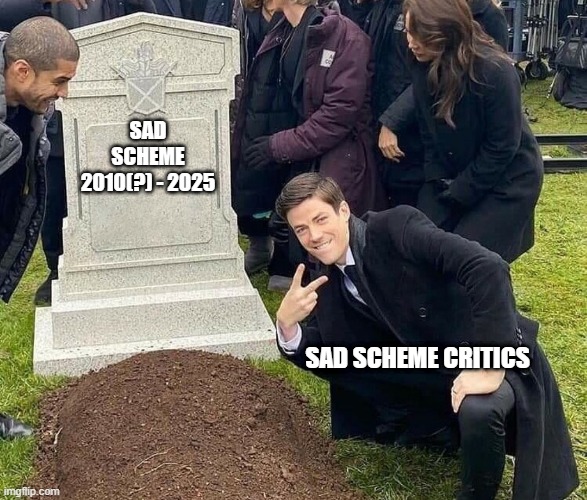 Prof. Fackrell posted a 2025 SAD Scheme year-in-review. Two standouts:
- Judge Kness said the SAD Scheme “should no longer be perpetuated in its present form.”
- Judge Ranjan (WDPa) and the District of New Jersey functionally banned the SAD Scheme in their courts.
6. Silicon Valley Execs Embrace Trump
Traditionally, Silicon Valley entrepreneurs have viewed regulators with suspicion and preferred technology solutions over legal ones. That stereotype is partially outdated. Many Silicon Valley leaders–such as Musk, Zuckerberg, Ellison, Benioff, and toss in Bezos for good measure–have enthusiastically embraced crony capitalism and anticipatory compliance with MAGA expectations (when it personally benefits them). [See also “How the Bay Area’s tech billionaires behaved in 2025.”] The oligarchs’ subservience to Trump diverges from mainstream Silicon Valley views, but those with the gold make the rules.
5. Internet Censorship Rolls Out Globally
2025 global censorship lowlights include the UK Online Safety Act and Australia’s ban of under-16s from social media. We are well-past the high water mark of online free speech globally. 📉
4. New Notice-and-Takedown Scheme for “Visual Intimate Depictions”
The Take It Down Act combines CSAM, non-synthetic non-consensual pornography, synthetic AI-generated pornography, and other “visual intimate depictions” into a single regulated content category. This lazy drafting ensures that the law confusingly overlaps and supplements existing law–and regulates constitutionally protected content.
The law creates a new notice-and-takedown scheme for intimate visual images (this mechanism goes into effect this summer). Services must resolve all of the following issues within 48 hours of receiving each takedown notice about intimate visual depictions:
- Can the service find the targeted item?
- Is anyone identifiable in the targeted item?
- Is the person submitting the takedown notice identifiable in the targeted item?
- Does the targeted item contain an intimate visual depiction of the submitter?
- Did the submitting person consent to the depiction?
- Is the depiction otherwise subject to some privilege? (For example, the First Amendment)
- Can the service find other copies of the targeted item?
- [repeat each step for each duplicate. Note the copies may be subject to a different conclusion; for example, a copy may be in a different context, like embedded in a larger item of content (e.g., a still image in a documentary) where the analysis might be different]
As you can imagine, this process will lead to many unwarranted removals, especially after vigilantes and trolls start weaponizing the process.
3. Can Anything Stop the Tidal Wave of AI Regulations?
 State legislatures are in a regulatory frenzy over Generative AI. In response, Congressional Republicans unsuccessfully proposed a moratorium on state AI laws. When that failed, Trump issued a performative executive order discouraging some state AI laws.
Eventually, the Supreme Court will decide if Generative AI outputs qualify for First Amendment protection. If so, many of the state AI regulations are unconstitutional. If not, Generative AI is doomed.
2. The TikTok Divest-or-Ban Calvinball
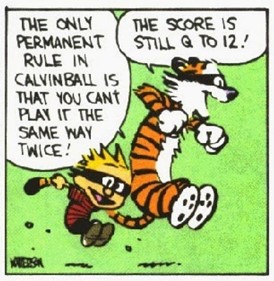
In January, the Supreme Court upheld Congress’ TikTok divest-or-ban law. Shortly thereafter, the TikTok divest-or-ban deadline arrived on Biden’s last day in office. He took no action. President Trump then unilaterally extended the deadline without satisfying the statutory preconditions for an extension. Trump has since purportedly issued several more extensions without any statutory authority to do so. Trump also (without any authority to do so) had the DOJ tell app stores to keep TikTok available despite the law.
 As a result, an undivested TikTok has remained publicly available throughout 2025 despite Congress’ ban. This outcome mocked the Supreme Court and Congress:
- The Supreme Court accepted Congress’ pretextual claims that TikTok threatened national security and consumer privacy. Trump’s defiance exposed that no one, including Congress, actually cared about these purported harms.
- Congress passively watched Trump disregard a valid enacted and alleged constitutional law.
Also, Congress intended the divest/ban to combat Chinese authoritarianism, but it actually facilitated Trump’s domestic authoritarianism. Trump used the law to broker a kleptocratic divestment to his buddies who will keep TikTok’s algorithm friendly to Trump.
I teach the TikTok ban in week 1 of my Internet Law course as Exhibit A of how Internet Law is Calvinball.
1. Supreme Court Upholds Mandatory Online Age Authentication (FSC v. Paxton)
I was wrapping up a 2-week China trip when the Supreme Court issued its opinion in Free Speech Coalition v. Paxton. I was eager to return to a country that has a First Amendment–so I could access most websites without a VPN; I wouldn’t have to show my passport to enter every museum; and I could freely criticize the government without fearing for my liberty. And then the Supreme Court’s FSC v. Paxton opinion made me question everything.
As just one example of the court’s wrecking ball to American principles: the majority adopted intermediate scrutiny to evaluate the law, even though neither party argued for that standard, and then the court analyzed intermediate scrutiny without giving either side the chance to argue the standard. Pure Calvinball.
By overturning 30-year-old precedent, the opinion newly opened the floodgates on mandatory online age authentication. The majority opinion claimed it was limited to children’s access to online pornography, but the opinion repeatedly and gratuitously went much further. Emboldened regulators around the country are proliferating age authentication mandates on a diverse range of topics. The constitutional battles over those laws will rage for years. Here’s a roundup of NetChoice’s 2025 efforts.
 Regardless of how the legal battles turn out, Internet publishers are already deploying age authentication solutions to manage their legal risks, and they won’t be quick to rip out these implementations. Thus, the FSC opinion let the age authentication genie out of the bottle, and it will never go back in–regardless of what the courts or the Constitution say in the future.
FSC v. Paxton has locked us into an age-authenticated Internet, very different from the one we have today, with less privacy and security, less free speech, less content, and less resiliency. Everyone will be poorer for it.
Well, almost everyone. The censors are giddy–as are the age authentication vendors, who celebrating their good fortune with a black tie industry awards gala. 🥂 See you there. 🙄
__
(Dis)Honorable Mentions
Other 2025 items of note:
- The first batch of district court rulings regarding copyright and Generative AI have been a mixed bag. A few courts have rejected copyright claims over training data, except when the source files were obtained via file sharing. We’ll see how these opinions fare on appeal. Amidst this uncertainty, Anthropic agreed to a massive $1.5B settlement.
- The Meta Pixels cases keep chugging along. There are now hundreds of rulings in Westlaw, and the plaintiffs are doubling-down against other unique identifiers. However, the pixel cases aren’t always doing well on appeal. Could the Meta Pixel litigation frenzy flame out when the appellate court speak up?
- The US State Department has threatened to ban content moderators and actually banned five Europeans associated with the DSA. US government censorship will continue until free speech improves.
- Many people have celebrated the GDPR as the gold standard of global privacy laws. But…it’s also stifling the EU and needs reworking (e.g., 1, 2). 🤷♂️
- It’s the 5 year anniversary of Meta’s Oversight Board. How’s that been working out?
- It’s also the 5 year anniversary of the Copyright Claims Board. How’s that been working out? Reminder: Congress created the Copyright Claims Board in December 2020, when perhaps it should have had other priorities.
* * *
Previous year-in-review lists from 2024, 2023, 2022, 2021, 2020, 2019, 2018, 2017, 2016, 2015, 2014, 2013, 2012, 2011, 2010, 2009, 2008, 2007, and 2006. John Ottaviani and I previously listed the top Internet IP cases for 2005, 2004 and 2003.
* * *
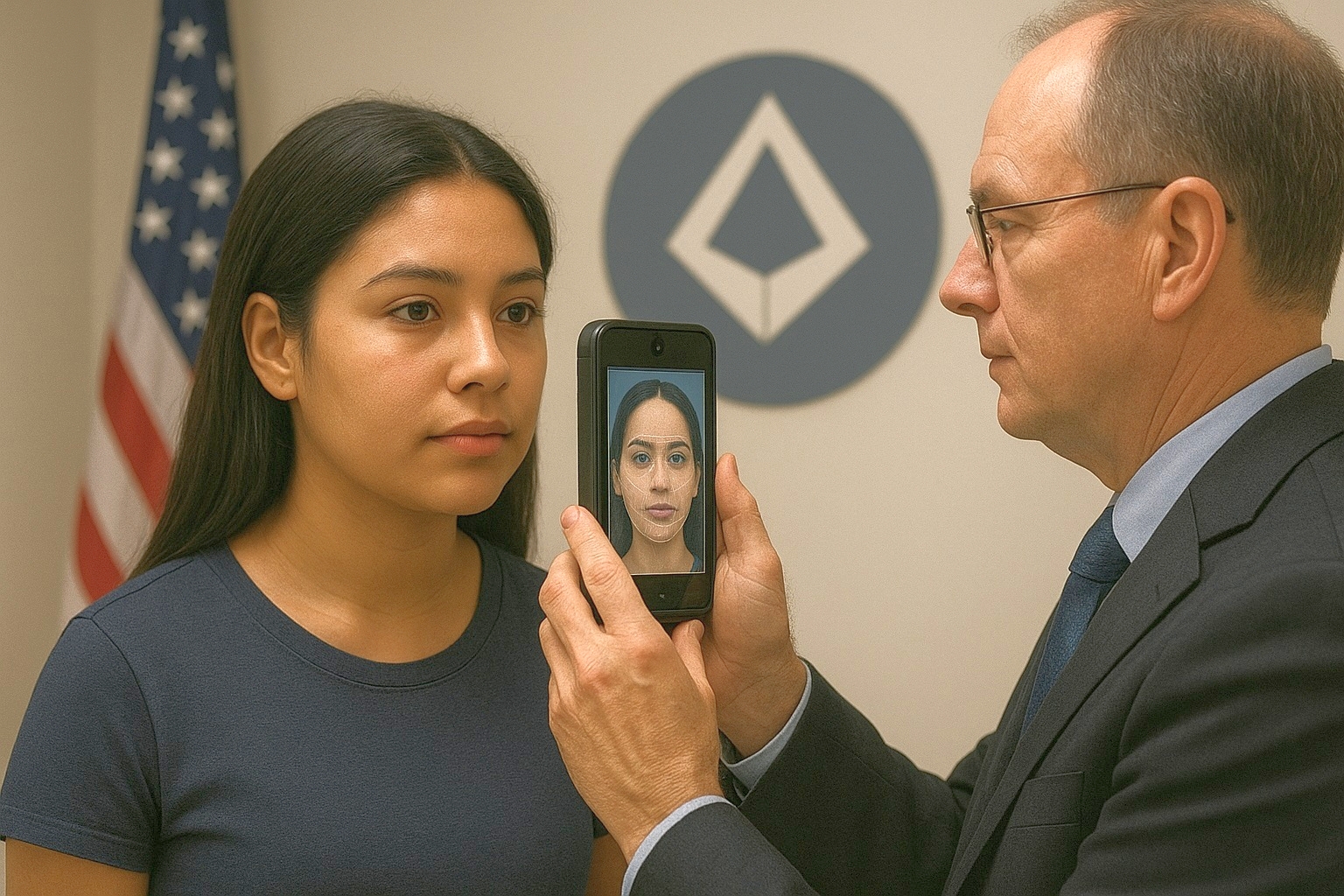
Generated by ChatGPT Oct. 2025
My publications in 2025:
Pingback: Links for Week of January 9, 2026 – Cyberlaw Central()