
A SAD Scheme Plaintiff Unsuccessfully Plays an IP Privilege Card–Price v. Schedule A Defendants
All SAD Scheme cases are, by definition, sad. This case achieves even greater depths: it’s Flori-dumb level SAD.
* * *
The plaintiff, Price, has a trademark registration in the phrase “White Privilege Card,” for novelty plastic identification cards. Ugh. His lawsuit names 102 defendants and “follows the mold of thousands like it that have appeared in the last few decades,” including, as usual, getting an ex parte TRO. However, the case falls apart when he requests a preliminary injunction.
The court says the case “presents difficult merits and procedural questions regarding due process and joinder….[and] presses the bounds of the judiciary’s equitable powers.” In fact, it’s pretty easy to spot the many, many flaws in this case. The opinion contains 37 pages of withering critiques that would make many lawyers cry if a judge expressed these concerns about their work. For example, the court says:
- “At the time that Price moved for a temporary restraining order, Price provided no legal names of the sellers.” [I guess precisely identifying defendants is now optional to getting a TRO?]
- “Price did allege irreparable harm in his affidavit, but only in general terms without differentiation between the over 100 sellers’ products or the sellers’ likelihood of evading judicial action.”
- “Absent from the preliminary injunction motion and the properly attached papers upon which it relies is any description or a visual depiction of Price’s own products or how the Mark appears in context….Without evidence in the record of Price’s Mark as consumers encounter it, the Court cannot assess its similarity with the screenshots of the allegedly infringing products displayed in Schedule B.” [Schedule B was 150 pages of poorly organized screenshots of the defendants’ products. Filed under seal, naturally.]
- “Price fails to provide evidence of how the Mark appears in context, making it impossible to assess whether the defendants’ marks are identical or similar to Price’s Mark or otherwise evaluate consumer confusion. Even if Price had properly submitted evidence of his Mark, his arguments about the similarity of the sellers’ products are too generalized, and Price presents no evidence of the strength of his Mark or the market more broadly. Indeed, several allegedly infringing products bear no resemblance to the description of Price’s Mark.”
- “Price did not offer a single example of consumer confusion or specify any product or defendant in particular.” Later, the court says “Price’s allegations of similarity against at least four of the sellers’ products fail on their face, as the cards are distinct from Price’s Mark.”
- “While many other products appear identical or nearly identical to the card displayed at the hearing (at least based on the screenshots, as no tangible products were introduced) and Price might ultimately succeed against some of those sellers, Price offers no specific argument about any of them in his motion, nor any evidence concerning the customer base, advertising, sellers’ intent, actual consumer confusion, or consumer sophistication. While “[t]here are no hard and fast rules as to how much evidence of confusion is enough,” surely this is not enough.”
- “Price’s conclusory allegation that he and the sellers operate in the same geographic areas is hardly enough to satisfy Rule 8.”
- “absent from the record is any evidence of actual confusion or argument about consumer sophistication—let alone analysis of any specific infringing product.”
- “the alleged similarity (based on the screenshots) proves little more than that it is seemingly easy to make and market the cards. That may very well be true, but it does not mean that joinder is proper under Rule 20.”
- “Price alleged that the defendant sellers use third-party marketplaces to sell infringing goods. Price never alleged that the nonparties were aiding and abetting the infringement or otherwise acting in concert with the sellers under Rule 65(d)(2)(C)….at the time that the temporary restraining order was entered, Price failed to prove that the Court had authority to direct a nonparty financial institution or marketplace to halt the movement of funds in an account when that nonparty did not know about the infringement.”
- “Price does not explain or provide evidence why preliminary relief of this scope—a total asset freeze of every defendant—is necessary to secure a later equitable remedy from any particular defendant.”
- “unlike other Schedule A litigation, many of the defendants according to Price’s amended complaint are based in the United States, mitigating one of the barriers that Pricer [sic] earlier alleged might prevent later recovery. Given this and Price’s failure to offer any specific justification for freezing the assets of any particular defendant, granting an asset freeze would go against the very purpose of equity.” [Note: anyone who tries to normalize the SAD Scheme by saying it only targets foreign defendants can stuff it.]
- “not all of the defendants have received notice of the motion for a preliminary injunction, and, even for those that Price has noticed under Rule 65, Price has not proven service of process of the underlying complaint for any seller. That creates one-sided briefing, which “renders balancing the private interests impossible.” Moreover, the vagueness of the complaint cautions against an award of a preliminary injunction, particularly because an asset freeze is a powerful remedy. With such a dearth of information and lack of specificity, “there is significant doubt that the Schedule A mechanism serves the public interest” in its present form.”

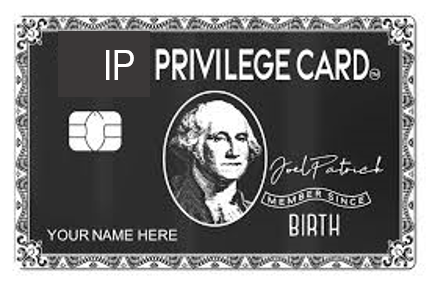 To me, it feels like the lawyers expected to get their wishlist granted just by showing up in court. Maybe they thought their IP privilege card was a get-out-of-lawyering-free card…?
The court summarizes its conclusions:
Because of procedural irregularities, due process problems, and the absence of evidence to support a substantial likelihood of success on the merits, I vacate the temporary restraining order, deny the motion for a preliminary injunction, and dismiss the amended complaint as to all defendants but Cone
[Cone has brought counterclaims against Price, pointing out she uses cardstock and not plastic and began selling her items 3 years before Price got started.]
Good for the court for bouncing this crap lawsuit now. AND YET….the lawyers wreaked some havoc with the court-approved TRO:
Price reported settlements with approximately twenty-three sellers and separately filed notices of voluntary dismissal of his claims against another nineteen. Four sellers responded to the preliminary injunction motion, and Price settled or voluntarily dismissed his claims against all but one of them.
This sounds bad, so how do you think the court addressed these problems? Did the court…
- sanction Price for getting an unmerited TRO;
- provide relief to the online marketplaces who had to contend with a TRO that never should have applied to them; [Note: “Price represented at the February 4 hearing that the freezes remain in place despite the expiration of the temporary restraining order.” Continued post-TRO restrictions are typical. It’s a good reminder of how the SAD Scheme impacts defendants outside the court’s purview.]
- dismiss the remaining defendants with prejudice; [the court did dismiss the defendants….without prejudice FFS]
- provide recourse for the 23 settlements that were triggered by the unmerited TRO;
- compensate the seller-defendants who spent their time and money to respond to the obviously defective PI motion; or
- flag the lawyers’ numerous and obvious failings for potential license discipline?
 Nope. None of the above. This is a SAD Scheme case–a genre where judges rarely impose even a trivial amount of accountability. 👌
While it’s easy to mock the terrible work by these lawyers, to me, they are a symptom of the disease. The SAD Scheme only works when lawyers bend the law and facts to reach undeserved outcomes. The SAD Scheme is rigged in such a way that it categorically encourages bad lawyering. Hate the players AND the game.
Case Citation: Price v. Schedule A Defendants, 2026 WL 470599 (M.D. Fla. Feb. 19, 2026). The court’s TRO. The court’s order to show cause regarding joinder.
Personnel note: the plaintiff’s lawyers are Terry Marcus Sanks and Liandra Izquierdo of Beusse Sanks, PLLC, Orlando, FL.

Prior Blog Posts on the SAD Scheme
- New Article Alert: “SAD Scheme Standing Orders”
- Greer Burns Law Firm Sanctioned for “Willfully Abusive” and “Egregious” SAD Scheme Judge-Shopping
- Schedule A: Ten Notable Developments in 2025 (Guest Blog Post)
- Second Circuit Rejects Email Service on Chinese Defendants in Baby Shark SAD Scheme Case
- 11th Circuit Sidesteps the SAD Scheme’s Problems–Ain Jeem v. Schedule A
- Another Shill Article Tries to Normalize the SAD Scheme
- Court Sanctions Plaintiff’s Lawyer for Unverified Claims That the Defendant Was Hiding–Guangzhou Youlan Technology Co. Ltd. v. Onbrill World
- SAD Scheme Cases Are a Cesspool of IP Owner Overreaches–Nike v. Quanzhou Yiyi Shoe Industry
- District of New Jersey Adopts SAD Scheme Standing Order
- Court “Sanctions” SAD Scheme Judge Shopping—Crimpit v. Schedule A Defendants
- Chicago-Kent SAD Scheme Symposium TOMORROW
- Amicus Brief Urges Seventh Circuit to Award Attorneys’ Fees in SAD Scheme Case–Louis Poulsen v. Lightzey
- Court Rejects Schedule A Claims Against Sellers of Compatible Parts/Accessories (Cross-Post)
- Judge Kness: the SAD Scheme “Should No Longer Be Perpetuated in Its Present Form”–Eicher Motors v. Schedule A Defendants
- SAD Scheme Lawyers Sanctioned for Judge-Shopping–Dongguan Deego v. Schedule A
- Judge Ranjan Cracks Down on SAD Scheme Cases
- Because the SAD Scheme Disregards Due Process, Errors Inevitably Ensue–Modlily v. Funlingo
- SAD Scheme-Style Case Falls Apart When the Defendant Appears in Court—King Spider v. Pandabuy
- Serial Copyright Plaintiff Lacks Standing to Enforce Third-Party Copyrights–Viral DRM v 7News
- Another N.D. Ill. Judge Balks at SAD Scheme Joinder–Zaful v. Schedule A Defendants
- Judge Rejects SAD Scheme Joinder–Toyota v. Schedule A Defendants
- Another Judge Balks at SAD Scheme Joinder–Xie v. Annex A
- Will Judges Become More Skeptical of Joinder in SAD Scheme Cases?–Dongguan Juyuan v. Schedule A
- SAD Scheme Leads to Another Massively Disproportionate Asset Freeze–Powell v. Schedule A
- Misjoinder Dooms SAD Scheme Patent Case–Wang v. Schedule A Defendants
- Judge Hammers SEC for Lying to Get an Ex Parte TRO–SEC v. Digital Licensing
- Judge Reconsiders SAD Scheme Ruling Against Online Marketplaces–Squishmallows v. Alibaba
- N.D. Cal. Judge Pushes Back on Copyright SAD Scheme Cases–Viral DRM v. YouTube Schedule A Defendants
- A Judge Enumerates a SAD Scheme Plaintiff’s Multiple Abuses, But Still Won’t Award Sanctions–Jiangsu Huari Webbing Leather v. Schedule A Defendants
- Why Online Marketplaces Don’t Do More to Combat the SAD Scheme–Squishmallows v. Alibaba
- SAD Scheme Cases Are Always Troubling–Betty’s Best v. Schedule A Defendants

- Judge Pushes Back on SAD Scheme Sealing Requests
- Roblox Sanctioned for SAD Scheme Abuse–Roblox v. Schedule A Defendants
- Now Available: the Published Version of My SAD Scheme Article
- In a SAD Scheme Case, Court Rejects Injunction Over “Emoji” Trademark
- Schedule A (SAD Scheme) Plaintiff Sanctioned for “Fraud on the Court”–Xped v. Respect the Look
- My Comments to the USPTO About the SAD Scheme and Anticounterfeiting/Antipiracy Efforts
- My New Article on Abusive “Schedule A” IP Lawsuits Will Likely Leave You Angry
- If the Word “Emoji” is a Protectable Trademark, What Happens Next?–Emoji GmbH v. Schedule A Defendants
- My Declaration Identifying Emoji Co. GmbH as a Possible Trademark Troll