
Another Confusing Internet Jurisdiction Opinion (This Time, from the 1st Circuit)–Stokinger v. Armslist
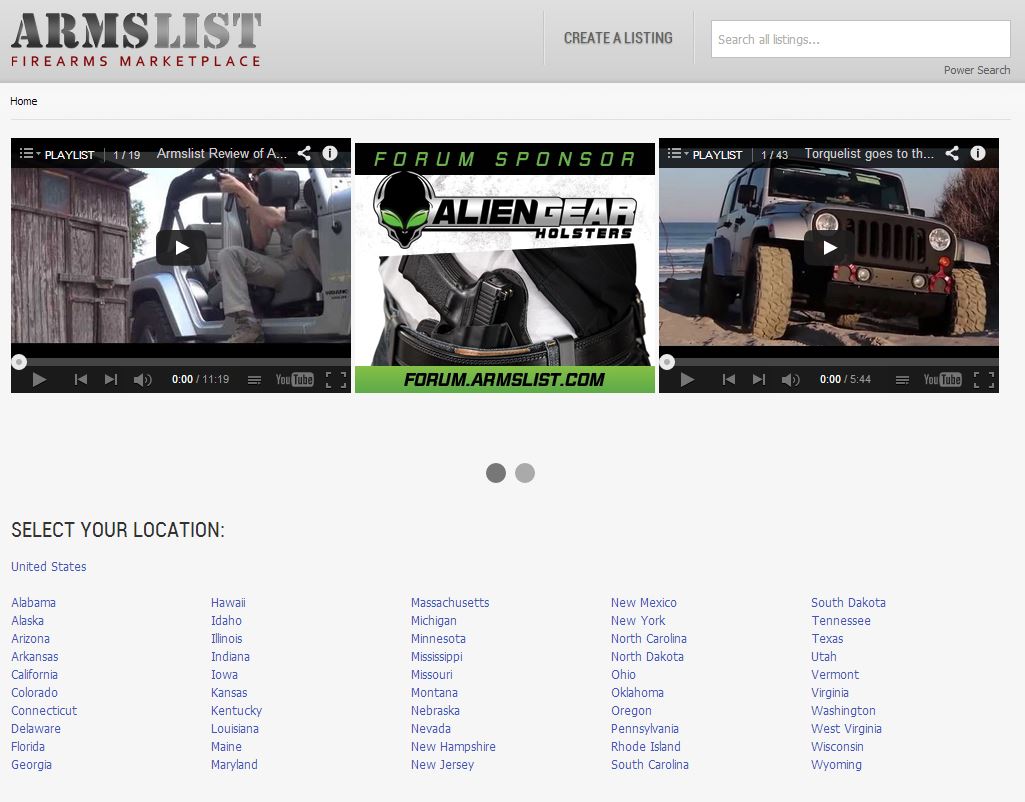 I previously summarized: “This case involves the tragic shooting of a police officer. The shooter acquired the gun illegally from a seller who had acquired the gun via Armslist.” Armslist’s gun sale occurred in 2015. The shooting took place in 2016. The plaintiffs filed their first lawsuit against Armslist in 2018. In 2020, the Massachusetts Superior Court dismissed the case on Section 230 grounds. In 2021, that court dismissed the case for Armslist’s lack of personal jurisdiction in Massachusetts.
I’m not sure how the plaintiffs will navigate around the statute of limitation, but they filed a new complaint against Armslist in D.N.H. in 2023. They are now arguing that Armslist negligently designed its service (to try to get around the Section 230 defense that applied in Massachusetts). The D.N.H. court granted Armslist’s motion to dismiss for lack of personal jurisdiction in New Hampshire. The plaintiffs appealed to the First Circuit, which issued an inscrutable opinion that further clouds the rules of Internet jurisdiction.
* * *
To establish specific jurisdiction in the First Circuit, the plaintiffs must show (1) relatedness, (2) purposeful availment, and (3) reasonableness:
The relatedness prong requires that each claim “directly arise[] out of or relate[] to” the defendant’s contacts with the forum state. The purposeful-availment prong requires that those contacts “represent a purposeful availment of the privilege of conducting activities in” the forum state. The reasonableness prong requires that “the exercise of jurisdiction” over each claim be “ultimately reasonable.”
Sounds pretty straightforward. And yet…
The district court didn’t resolve relatedness. Instead, it held that Armslist didn’t purposefully avail itself in New Hampshire. To show purposeful availment, the plaintiffs highlighted three facts about Armslist:
(1) the design of Armslist.com, (2) the advertising revenue that Armslist generated from visitors to its website, and (3) the average of “16,000 listings per year for firearms for sale in New Hampshire” that were posted on Armslist.com from 2018 on.
With respect to the website design, the court says “the Stokingers need to do more than show that Armslist knew that its website had the capacity to facilitate firearm sales in New Hampshire…[even though] the defendant had reason to think that its website’s design would result in the website impacting those in the forum state.”
Armslist lets sellers identify their location, but the plaintiffs didn’t allege that the gun’s listing identified a New Hampshire location. The court says the plaintifffs might have been able to argue that [the website’s design + a NH location = purposeful availment], but they didn’t.
With respect to Armslist’s advertising revenue, the allegations only reference Armslist’s capacity to generate NH revenues, not that it actually did so. If the plaintiffs have the data, this seems fixable in an amended complaint?
The appeals court spends most of its time evaluating the listings data from 2018. Armslist’s gun sale occurred in 2015 and the shooting occurred in 2016, and those dates set the facts for personal jurisdiction. (Note: for me, parsing these facts 10-11 years later reinforces the statute of limitations problem). The court says that *if* the 2018 listings did relate to the 2015/2016 activities, then the purposeful availment requirement is satisfied “when it is considered alongside the allegations and evidence regarding the website’s design and generation of advertising revenue”:
The evidence of the “New Hampshire” listings supplies what is otherwise lacking — evidence that supportably shows that Armslist knew that “it was intentionally operating its website” for the purpose of facilitating firearm sales in New Hampshire. It supportably does so because it shows that, from 2018 on, thousands of people each year were accessing Armslist.com and seeking to sell their firearms in New Hampshire specifically. And so, based on this additional evidence concerning the volume of “New Hampshire” listings, we find that Armslist had reason to know not merely that its website was capable of being used to facilitate firearm sales in New Hampshire but that it was, in fact, being so used.
Additionally, we conclude that Armslist was not merely a passive bystander to the website being so used. It had “voluntarily” taken an affirmative step to increase the likelihood that a firearm being offered for sale in New Hampshire would be purchased in that same state. It had implemented its geographic-filtering mechanism to enable would-be buyers to find firearms being offered for sale in the state and thus make a deal there and not in some other place….the Stokingers’ evidence about the FAQ page on Armslist.com supportably shows that Armslist expressly advised would-be sellers to use the geographic label that matched where they, and the firearm that they were offering for sale, were “physically located.”…
the evidence of those listings does make a prima facie showing that Armslist knew that there were thousands of “New Hampshire” listings on its website each year, starting in 2018. And so, those listings, when considered alongside the features of the website’s design that the Stokingers highlight, make a prima facie case that Armslist intentionally facilitated the culmination of sales in New Hampshire as opposed to any other place that the sellers, if left wholly to their own devices, may have chosen to close the deal…
through the thousands of “New Hampshire” listings posted on Armslist.com, Armslist was directly profiting from the advertising that it permitted on the website. By including the geographic-filtering mechanism described above, “it could be inferred,” as the District Court found, that Armslist was thereby generating “at least some amount of . . . advertising revenue from the New Hampshire listings,” which were posted by sellers looking to transact with New Hampshire buyers.
Armslist argued that it deployed the exact same website functionality for every state. In a response that reminded me of Briskin, the court responds: “a defendant who deliberately targets its behavior toward one state does not cease doing so just because it also chooses to deliberately target its behavior toward other states.”
Armslist retorted that many e-commerce websites use geography-specific dropdown menus but aren’t subject to specific jurisdiction in every state so enumerated. The court replies that the combination of 16k listings in New Hampshire + ad revenue + website design = Armslist “was specifically intent on its website leading to forum-state activity…[and] Armslist knew that its website so served” New Hampshire residents.
While this analysis benefits plaintiffs, the court nevertheless casts doubt on their case. With respect to the relatedness requirement–unaddressed by the lower court–the appeals court says: “it is not evident how New Hampshire-based firearm listings posted on Armslist.com years after the sale of the weapon alleged to have been used to shoot Officer Stokinger could suffice to satisfy the relatedness requirement.”
The court denies jurisdictional discovery to the plaintiffs, so they won’t get any help with the facts from Armslist.
* * *
Internet jurisdiction decisions routinely make my head hurt. They often involve impossibly fine distinctions and, for some reason, seem to reduce the opinion-writing skills of judges. In that spirit, this opinion contains an untangleable spaghetti code of nested doctrinal loops and drafting imprecisions.
I could not easily overlook the obvious statute of limitations problem and as well as the court’s sidestep of the relatedness requirement. Both issues have a non-trivial likelihood of mooting this case despite the court’s detailed analysis. In particular, the court seems to recognize the hypothetical nature of its discussion. The court says that IF the 2018 listings were related to the case, then specific jurisdiction would be satisfied, but the court then continues that it is possible–even likely–that the 2018 listings are not related to the 2015-16 events, in which case none of the other analysis matters.
As with the Briskin case, I am baffled about applying the court’s analysis to other circumstances. Take, as an example, eBay. It lists sellers’ locations, gets ad revenues from sellers, and allows users to search for local pickup. Is the court saying that these facts establish purposeful availment in every jurisdiction where eBay enables local pickup? Why or why not?
To be fair, Armslist clearly was intentionally curating NH buyers and sellers to match with each other. Many online services make these geographical matches. Between Briskin and this case, perhaps the legal rule is that such geographically dependent functionality ALWAYS results in personal jurisdiction in every supported geography, even if the service is merely structuring the conversation for its users’ convenience rather than intentionally trying to “target” a geography. In other words, the notion of georaphic “targeting” in personal jurisdiction may not depend on the defendant’s intent about purposefully availing themselves of any one particular jurisdiction and instead is more like a purity test about the defendant’s geographic knowledge. Too much geographic knowledge about where activity is taking place, and the courts will infer “targeting” (fairly or not) and find specific jurisdiction everywhere.
I note that Meta has just requested SCOTUS cert in a Vermont social media addiction case, claiming that the Vermont Supreme improperly found it was subject to specific jurisdiction in Vermont. Facebook’s core doctrinal issues are very similar to the Armslist case. I doubt the Supreme Court will take Facebook’s case, but at some point the Supreme Court needs to give more guidance about the Internet jurisdiction rules.
Case Citation: Stokinger v. Armslist LLC, 2026 WL 310022 (1st Cir. Feb. 5, 2026)
Other Blog Posts on Armslist
- Facebook Defeats Armslist’s Account Termination Lawsuit–Armslist v. Facebook
- Armslist Defeats Lawsuits Over Illegal Gun Sales (Without Section 230’s Help)–Webber v. Armslist
- Armslist Loses Two Section 230 Rulings, But Still Defeats Both Lawsuits
- Armslist Wins Another Section 230 Ruling–Stokinger v. Armslist
- Wisconsin Supreme Court Fixes a Bad Section 230 Opinion—Daniel v. Armslist
- Wisconsin Appeals Court Blows Open Big Holes in Section 230–Daniel v. Armslist
- Online Marketplaces Facilitating Gun Sales Don’t Kill People. People Kill People
- Gun Classified Ads Website Isn’t Liable for Murder–Vesely v. Armslist