

Free-Trial Commercial Database Defeats Publicity Rights Claim–LaFleur v. Yardi
Two preliminary notes:
1) This opinion is by a TAFS judge (Trump-appointed, Federalist Society).
2) The right of publicity doctrine is incoherent, and this opinion illustrates that.
* * *
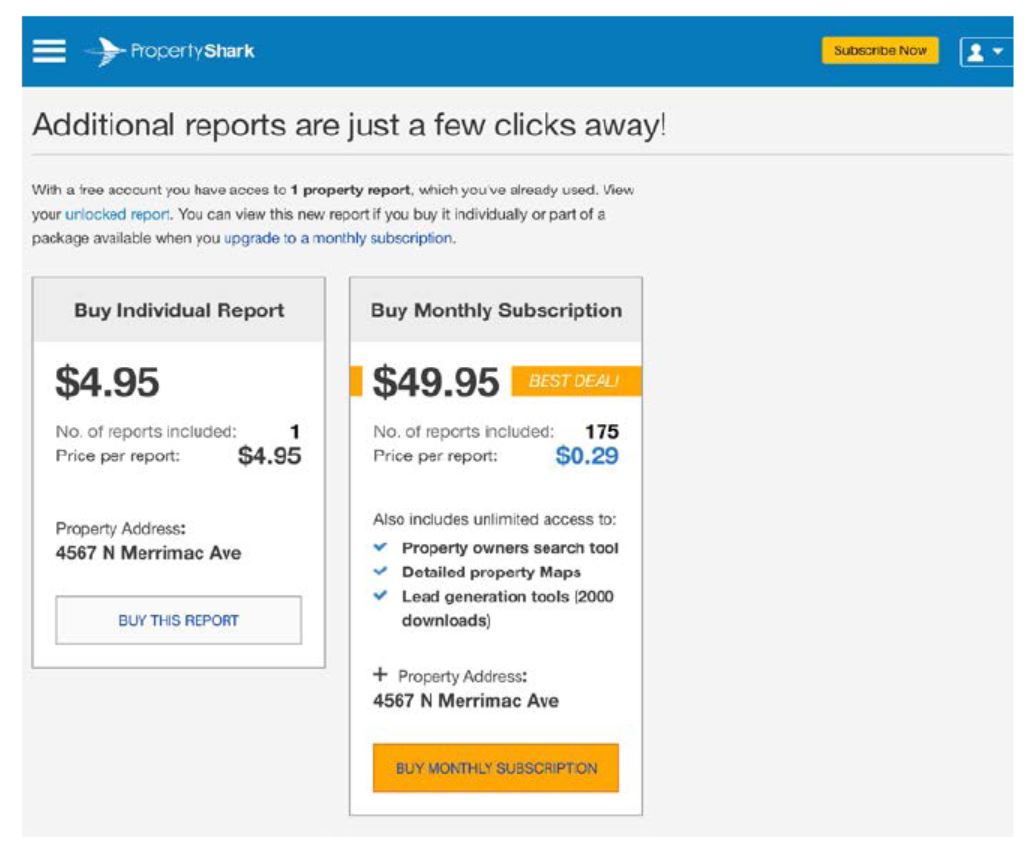
The plaintiffs are Ohio property owners. The reports on their properties “include their names, property address (which, in both cases, is also their home address), property purchase price, tax details, and other information about their Ohio property. Neither plaintiff consented to PropertyShark using their information. Nor would they have consented if asked.” They sued PropertyShark for publicity rights violations.
Huh? How can the publication of government records in a commercial database ever be a publicity rights violation? The purported rationale: a free trial of a commercial database of editorial content converts the records into ads during the trial, but the records revert back to their editorial content status when the trial ends. If this doesn’t make any sense to you, you are not alone. But there is a growing line of cases predicated on this premise, including the yearbook database and genealogy database cases. (Indeed, you might trace the rationale’s lineage to Facebook’s sponsored stories and the Fraley v. Facebook case from 15 years). Because the courts have been open to publicity rights claims in the yearbook and genealogy cases, the plaintiffs are proliferating the litigation to other free-trial/freemium commercial databases. Why wouldn’t they?
The court defines the elements of a publicity rights claim as “(1) unauthorized use of (2) a person’s commercially valuable name or likeness for (3) commercial purpose.” These elements are amorphous and flexible, like pretty much every other aspect of the publicity rights doctrine.
The court says that the “plaintiffs’ claims fail on the commercial-value prong”:
the commercial-value requirement laid down by Ohio courts saves businesses from having to blanch their advertisements of all likenesses lest they invade the owners’ right of publicity. Rather, it ensures that only those businesses are liable whose “purpose” in including the likeness is to take advantage of the “commercial or other values” associated with the likeness… if an ad element is present as a mere incident to the real star of the show, it’s not directly of “use” or “benefit” to the advertiser. [Huh?]
This passage implies that there is some kind of de minimis exception to publicity rights claims over ads, even if the person is identifiable. That doesn’t sound right to me.
So when does a name have commercial value sufficient to trigger publicity rights protections? The court says “a plaintiff needn’t possess widespread fame to have a commercially valuable persona—recognition within a subgroup suffice.”
This is an obviously problematic standard because it creates slippery slopes about what subgroups count and how much recognition is sufficient in those subgroups. These kinds of indeterminate standards are a bonanza to plaintiffs because they basically invite haggling. The court gets away with this standard because:
Not a single allegation in the complaint supports a finding that LaFleur’s or Grose’s (or any putative class member’s) name carries any recognition in any subgroup. Absent those kinds of allegations, we’re left to conclude that their names appeared only incidentally alongside PropertyShark’s invitations to the advertised service, in the sense that nothing about LaFleur or Grose as LaFleur or Grose adds value, in the user’s eyes.
So the bad pleadings in this case make it easier to sidestep the obviously problematic implications of the court’s standards.
The court rejects the plaintiff’s workaround that their names must have had commercial value because a commercial entity used them. The court distinguishes Wilson v. Ancestry because:
Ancestry.com used the plaintiff’s persona in a more targeted way than Yardi does: by sending personalized emails with the plaintiff’s information to prospective customers “who may be related” to the plaintiff, rather than appending a solicitation to subscribe onto any person’s property report in an untargeted way. So Ancestry.com affirmatively targeted its advertisements to people who might be related to the persona used in the advertisement, whereas PropertyShark passively invites users to become paying customers irrespective of which persona the user sees. In Ancestry, unlike here, the name itself was part of the ad’s value proposition.
That phrase “passively invites” sounds like an oxymoron.
* * *
To me, much of publicity rights law feels like Calvinball. For example, once we accept that free-trial offerings are “advertisements” that can turn editorial content items (such as government records) into content regulated by the right of publicity, I feel like we’ve already rigged the game. And saying that the plaintiffs’ names were commercially worthless, but other names might have “commercial value,” ensures many avoidable fights to figure out where those lines may be. None of this is rational or makes sense. We ought to take a giant step back and rethink the goals of the publicity rights doctrine, rather than proliferate increasingly haphazard legal standards incrementally.
Case Citation: LaFleur v. Yardi Systems, Inc., 26a0055p.06 (6th Cir. Feb. 27, 2026). The district court opinion.
Prior blog posts on Yearbook and Genealogy Cases
- Another Tough Ruling for People Search Databases–Camacho v. Control Group Media
- Three More Yearbook/People Database Cases Signal Trouble for Defendants
- Background Reports Protected by Section 230–Dennis v. MyLife
- Yearbook Defendants Lose Two More Section 230 Rulings
- Yearbook Database Cases Are Vexing the Courts–Sessa v. Ancestry
- Court Casts Doubt on the Legality of the Data Brokerage Industry–Brooks v. Thomson Reuters
- Section 230 Doesn’t Protect Yearbook Website’s Ads–Knapke v. Classmates
- Section 230 Covers Republication of Old Yearbooks–Callahan v. Ancestry
- Section 230 Doesn’t Protect Advertising “Background Reports” on People–Lukis v. Whitepages