
Thumbs-Up Emoji at Issue in a New Zealand Ruling–Manukonga v. Anthony & Emily Ltd
I don’t regularly track foreign emoji law decisions like I do US decisions, but this one got flagged to me, and I figured it was worth a short post.
Manukonga got hired by a cafe operated by Anthony & Emily Limited (A&EL). Her employment agreement specified that “her normal hours of work were 25-35 hours per week, from 6:30 am until 3:30pm each day on three to four days per week.” Manukonga was unhappy with the work conditions, but the employer noted that she kept responding to messages with smiley emojis, “which it says indicate she was not unhappy with the way she was being treated. Ms Manukonga states the reason she responded politely was because she was acting in good faith and wanted to maintain a positive working relationship despite how she was being treated.” A reminder that a smiley can serve many grammar functions, including acting as discourse management to non-substantively keep a conversation going (similar to how people nod their heads or say “yeah” or “uh-huh” as a conversing party is talking).
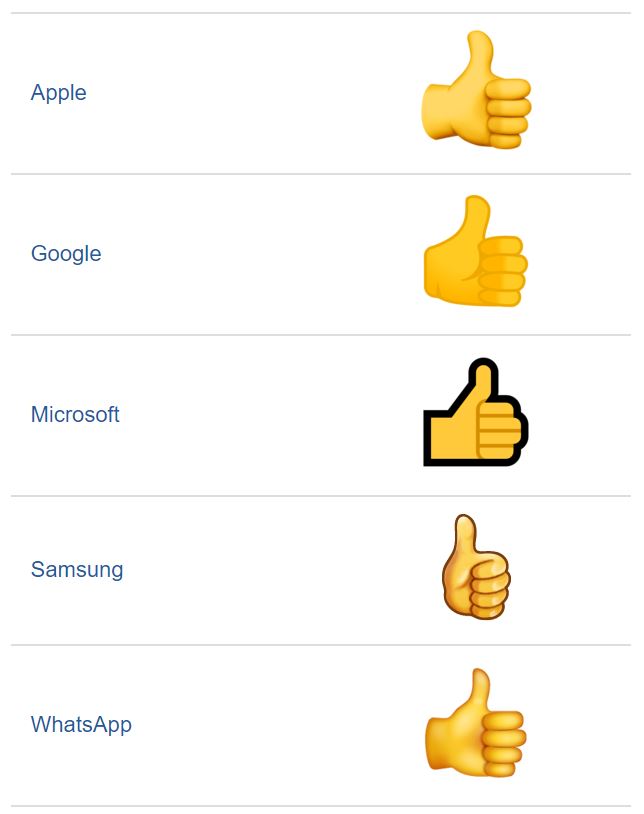 During her first few weeks on the job, Manukonga had a series of work conflicts, including a family member’s health emergency, COVID, and a house-sitting gig. In response, the cafe owner sent text messages saying that she could no longer guarantee the hours specified in the employment agreement (switching the role to what the Kiwis call a “casual position”) and asking if Manukonga was OK with this change. Manukonga responded with a “thumbs up” emoji.
Manukonga worked one more shift, then the owner essentially terminated her by leaving her off the work schedule and hiring a replacement. Manukonga initiated a grievance in the relevant government administrative office (the “Employment Relations Authority”), which issued this opinion.
The opinion says that Manukonga did not consent to the employment agreement amendment (from fixed work hours to the “casual” position):
A&EL relies on Ms Manukonga having responded with the thumbs up emoji to Ms Ma’s messages about a casual position and not being able to guarantee hours of work. While the IEA did not require changes to terms of the IEA to be in writing, Ms Ma’s explanation of the proposed change to Ms Manukonga’s employment was unclear and insufficient in light of the significant change it represented to the employment. A&EL cannot rely on the message exchange as a valid variation to casual employment.
The agency awarded Manukonga about $11k (NZD) (about $6k USD).
The opinion doesn’t directly address the standard uncertainty of whether the thumbs-up emoji indicates mere acknowledgement of or actual assent to the contract amendment, which is the most common legal dilemma when it comes to the thumbs-up emoji. Instead, the opinion implies the thumbs-up emoji could not constitute assent in this circumstance, because the preceding text messages did not provide enough information to produce Manukonga’s informed consent. Thus, Manukonga’s thumbs-up emoji instead functioned as non-substantive discourse management. Had the cafe owner’s messages been sufficiently clear about the position switch, this opinion implies that a thumbs-up emoji might have been enough to assent to the amendment.
This opinion adds to the ever-expanding jurisprudence of the thumbs-up emoji, one of the emojis that appear most frequently in court opinions. In my case census, I estimate there have been over 100 U.S. court opinions referencing the thumbs-up emoji. (Though, as usual, most of those cases only reference the emoji and don’t substantively analyze the emoji’s meaning). And of course, the thumbs-up emoji drew worldwide attention in Achter v. South West Terminal, the Saskatchewan opinion holding that a contract for the sale of flax was formed through text messages and a thumbs-up emoji.
Case Citation: Manukonga v. Anthony & Emily Limited, [2026] NZERA 834 (N.Z. Employment Relations Agency Nov. 10, 2026)