

Marketing a “California Ethos” Doesn’t Support a California Publicity Rights Lawsuit–Boyden v. Hyundai
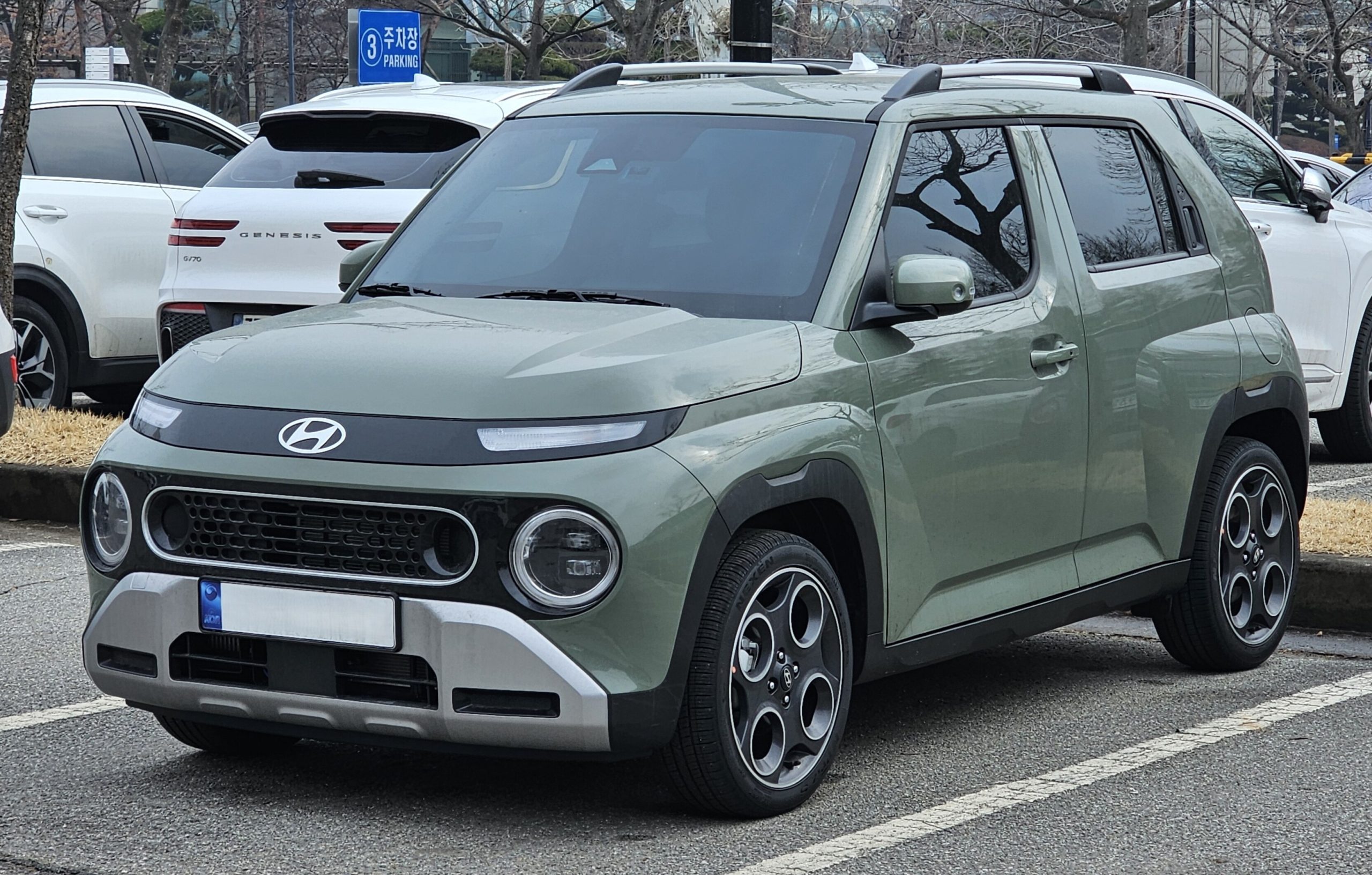
Damian B Oh, CC BY-SA 4.0 <https://creativecommons.org/licenses/by-sa/4.0>, via Wikimedia Commons
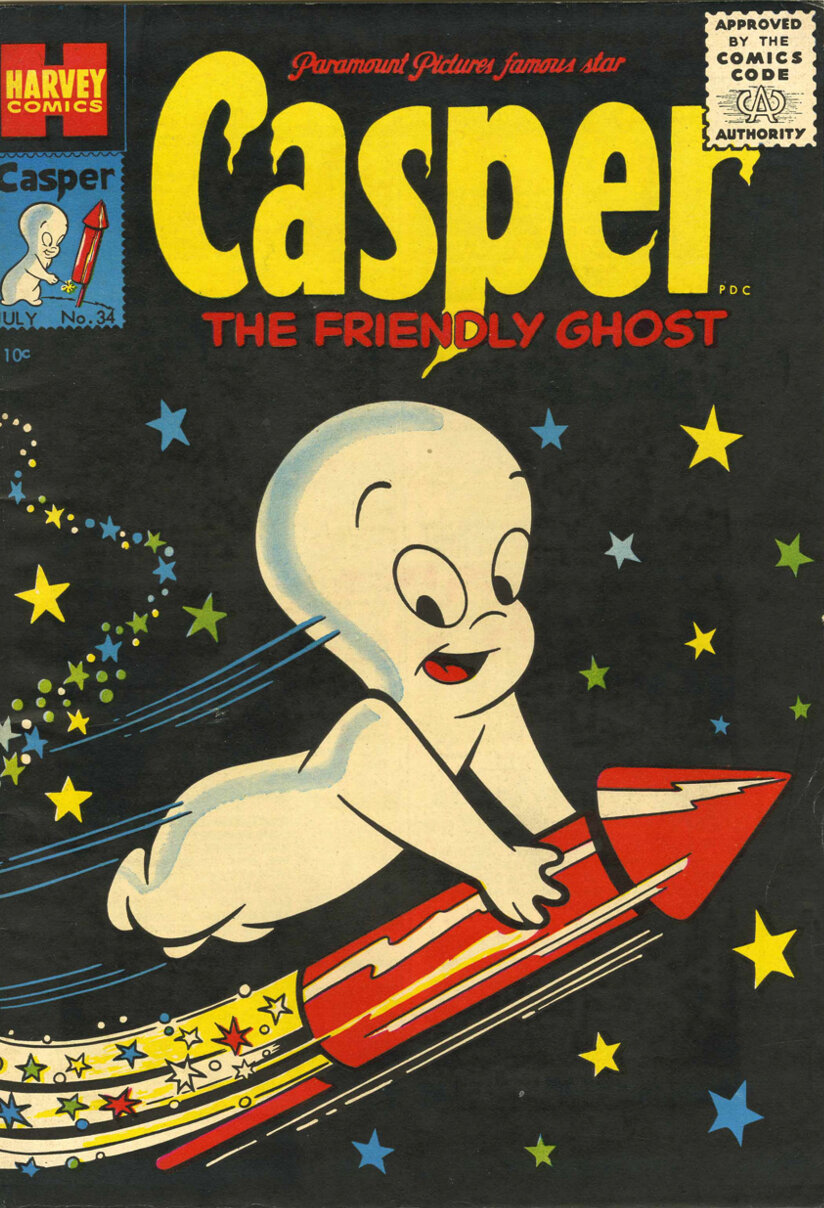
Robert (Bobbie) “Boyden is a skateboarding legend—known professionally by the nickname Casper—who is credited with having originated, in the 1970s, a skateboarding trick that came to be known as the Casper flip.” You can watch a video demonstrating the move.
Boyden claims that the Hyundai Casper SUV violates his California statutory publicity rights. But his arguments to link the Korean SUV to California were too gnarly, so the case crashes out instead.
* * *
Hyundai introduced a declaration explaining how it landed on this brand name:
the brand strategy team believed the name ‘Casper’ evoked youthful energy as it conjured up images of the child-like cartoon ghost and skateboarding tricks. The name also aligned with [HMC]’s other vehicles since [HMC] often names cars after geographic locations.”…
“As [HMC]’s first mini-SUV, [the Casper SUV] ‘flips’ people’s expectation that the car will be small and weak, when, in fact, it is small and sturdy. [In addition, HMC] ‘flips’ its conventional sales strategy by introducing Casper
as the first car to be sold [exclusively] online.
A few problems with this case should already be obvious:
First, the whole “flip” analogy was subtle. You have to do a lot of cognitive work to make the association they were thinking about. Even when Hyundai explains it, the consumer has to know the Casper Flip by name and then discard the skateboarding concept to extract the “flip” portion as a metaphor for SUV redesigns. I’m sure it made more sense in the brand team’s brainstorming room than when I read it in a court opinion.
Second, Casper made a point of how the “Casper” label has been extended to several other skateboarding moves. There isn’t a clear notion of genericide in publicity rights law. Still, it made me wonder if a name becomes a generic descriptor in a field, can the titular person still exercise control over it?
Third, Casper is the name of a city in Wyoming; and the homophone community of Caspar, California (notice the different spelling) on the Mendocino Coast is a first-rate tourist destination (my wife and I spend a lot of time there). A company can make a geographic reference in its brand without violating anyone’s publicity rights, even if people share the same name.
Fourth, the SUV targeted the South Korean market. It’s not been approved for the North American market. So Hyundai isn’t actually promoting the Casper brand in the US or California.
* * *
That last point highlights a key question: how is this case tied to California? The plaintiff team invested a lot of resources trying to connect the dots, including several “expert” reports.
One “expert” claimed that Hyundai can be sued in California because the Casper SUV marketing invoked a “California ethos”:
“the repeated use of palm trees, beaches, skateboards, and California fashion trends” in HMC marketing materials was “not an accident or something left solely to a marketing agency’s discretion,” but instead was the result of “a series of deliberate design and strategy choices meant to appeal to a specific group of consumers that have a particular affinity—in this case, for California.”
(There are so many songs celebrating the California lifestyle, but this is the one that kept running through my head).
Another “expert” took this angle (emphasis added):
“[T]he Roblox website allowed users to add features to the Casper, do a virtual test drive, and purchase the vehicle through a link on that website. Thus, while it is unclear whether the moment of purchase took place on California servers, it is clear that California infrastructure was crucial to the purchasing process. Customers traveled on a digital highway into California, and either passed through on the way to the purchase point or made the purchase, remotely, in California.”
It’s 2026, not 1995, and yet a so-called expert is invoking the metaphor of Roblox users traveling on a “digital highway” into California??? I’m envisioning those consumers driving their virtual Casper SUVs on the virtual information superhighway to a virtual California car dealer. 😑
* * *
Despite the “experts,” the litigation wipes out for lack of personal jurisdiction. Boyden cannot show that HMC expressly aimed a tort at California.
The appellate court emphatically rejects the idea that a Korean marketing campaign’s “California ethos” can form the predicate for jurisdiction in California:
we begin by dispelling the notion that what Franklin referred to as the “California ethos” could ever be considered as contributing to the establishment of the direct aiming requirement in this or any other case. Many businesses routinely draw on themes or elements evoked by cultures originating from beyond the borders of the state(s) or countr(ies) in which they operate. Such businesses include, for example, restaurants, martial arts studios, foreign language academies, and sellers of apparel. To suggest that a restaurant chain in Japan that offers only gumbo, jambalaya, etouffee, Abita beer, and beignets, that serves those dishes only to customers in Japan, and whose marketing features a fleur-de-lis, mardi gras beads, and zydeco music, should, by virtue of that menu and marketing, be exposed to an increased risk of being haled into court in Louisiana is to offend traditional notions of fair play and substantial justice. By the same token, so too would it offend such notions to suggest that a restaurant chain in Louisiana that offers only sushi, sashimi, ramen, miso, and sake, that serves those dishes only to customers in Louisiana, and whose marketing features images of Mount Fuji, cherry blossoms, and samurai swords should, by virtue of that menu and marketing, be exposed to an increased risk of being haled into court in Japan….we reject Boyden’s argument that HMC’s use of the “California ethos” in its marketing should influence our express aiming analysis
If a judge eviscerated my expert report like this, I would run home crying to my mama. It almost felt like Justice Kelety enjoyed detailing how the expert had immolated his credibility. (The lawyers who solicited and based their advocacy on this expert report shouldn’t feel too great about their decisions either).
There are problems with other parts of the case:
- “defendant’s use of digital marketing services made available to it by California-based digital technology companies is, by itself, too slender a reed on which to premise a claim of sufficient aiming activity”
- “the opinions of Franklin and Woolley seem speculative in many respects” because they repeatedly assumed certain facts were “more likely than not” true.
- “neither the declarations of Boyden’s marketing expert nor the declaration of his counsel complied” with California’s procedural rules for making declarations. (Oops).
* * *
There is a good reason why plaintiff’s lawyers generally don’t bring overly speculative publicity rights lawsuits. The California statute (3344) says the “prevailing party in any action under this section shall also be entitled to attorney’s fees and costs.” In other words, the attorney fee shift is mandatory, not permissive. That puts plaintiffs on the hook for potentially big bucks if they lose, like they did here. Boyden will be receiving Hyundai’s giant bill for its attorneys’ fees, which Team Boyden helped inflate by overlitigating the jurisdiction issue. That payment will be on top of any out-of-pocket payments Team Boyden already made to its “experts.”
Case Citation: Boyden v. Hyundai Motor Co., 2026 WL 3046224 (Cal. App. Ct. Oct. 12, 2026).
Personnel notes: The plaintiff lawyers in this case were Ochs Law Firm (Jason Edward Ochs) and Wagstaff & Cartmell (Adam S. Davis and Austin P. Brane). The plaintiff ‘s experts included “the head of strategy at automaker Nissan’s marketing agency, Jeremy Franklin, who described himself as an expert in automotive and digital marketing” and communications professor Samuel C. Woolley, who has an endowed chair in “disinformation studies” (does his scope of research include disinformation in expert reports?).