

Plaintiffs Are Still Litigating–and Losing–Website Framing Cases (S&S v. Promo Hunt)
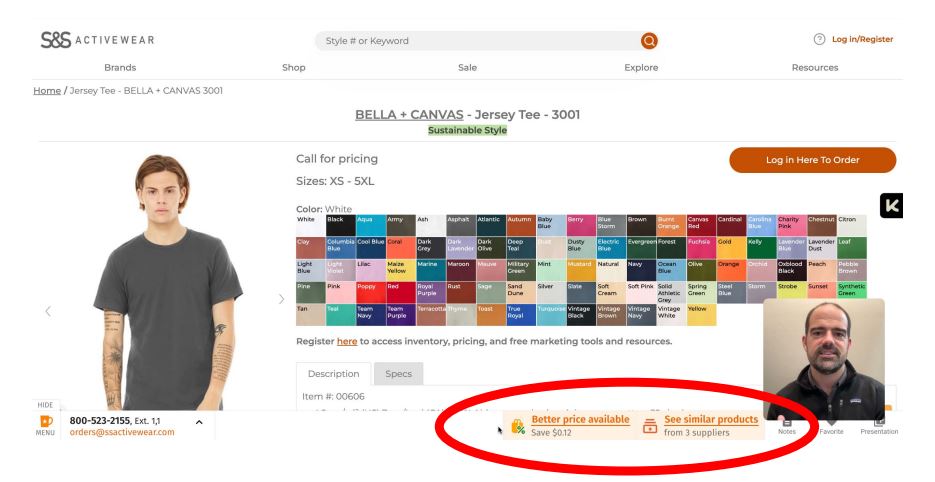
In an effort to avoid that graveyard of litigation, the plaintiff tried the trespass to chattels doctrine. But….um…exactly how does a browser extension trespass any chattel controlled by the retailer? The retailer’s answer (I shit you not, I would not make up shit like this):
superimposing the Price Comparison Tool over other content on the S&S Site trespasses on valuable digital real estate that S&S has expended time, resources, and effort to make aesthetically and functionally appealing to its customers (emphasis added)
Holy mixed metaphors….”digital real estate”!

This lawsuit would be mockable at any time, but its mockability skyrockets in the wake of the Best Carpet Values v. Google decision, which essentially rejected a functionally identical “trespass to web pages” argument.
Sticking closely to the Best Carpet Values decision, the court tells the plaintiff:
the alleged “trespass” is not to any aspect of S&S’s website that is in its possession. Rather, S&S alleges that Defendants’ Price Comparison Tool alters the appearance of S&S’s website in a consumer’s web browser on the consumer’s computer. S&S does not allege that it possesses the consumer’s browser or computer. And S&S cites no authority that it possesses, or has any property interest in, the appearance of its website on a third party consumer’s browser or computer.
The plaintiff tried to obfuscate this issue by arguing that trespass to chattels can apply to intangible property–a slightly true but deeply problematic statement. As I’ve repeatedly explained, if the definition of “chattels” mean intangibles–i.e., the antonym of “chattels”–then trespass to chattels morphs into a doctrine of “trespass to plaintiff’s butthurt feelings,” and the law implodes on itself.
The court doesn’t take this bait. Instead, like the Best Carpet Values decision, the judge observes that by the time the browser extension modifies the retailer’s web page, the digital bits are no longer in the retailer’s “possession.” I would much prefer courts define chattels to categorically preclude debates over its applicability to intangibles, but the court’s logic gets the job done.
There’s nothing left for the retailer to complain about:
Defendants are not alleged to have intercepted and altered S&S’s website transmission such that it was impossible for any consumer to view S&S’s website as S&S intended. Rather, Defendants provided a tool that consumers could decide to use to view S&S’s website in a way chosen by the consumer once the website transmission was in the consumer’s possession. S&S has no property right in the consumer’s internet viewing decisions.
Furthermore, the alleged act of “trespass” identified by S&S is an action taken by the consumer, not by the Defendants. The action S&S alleges constitutes “trespass” is the appearance of Defendants’ Price Comparison Tool superimposed on S&S’s website. But it is the consumer who decides whether to enable the Price Comparison Tool on their computer. To the extent enabling the Price Comparison Tool constitutes a trespass, Defendants aren’t the ones committing it.
In a sense, the court’s ruling is pro-user. The plaintiff is essentially claiming that it alone determines the canonical view of the website. However, websites are viewed on a wide range of devices and browsers, all of which the user chooses, so web pages don’t have any canonical version that the law can recognize. The court’s decision seemingly lets users, not the website, choose which technologies they want to use to access a website.
And yet, this passage also implies that perhaps the retailer could sue the users for trespass to its valuable digital real estate for marring its beautiful and canonical web page. As stupid as that sounds, such a claim would not be materially worse than the claim rejected here.
Case Citation: S&S Activewear LLC v. Promo Hunt, Inc., 2026 U.S. Dist. LEXIS 91156 (N.D. Ill. April 23, 2026). The complaint. Per the complaint, this lawsuit addressed more topics that just trespass to chattels. Still, three lawyers from Sidley & Austin–traditionally, one of the most prestigious law firms in the country–signed off on the phrase “trespasses on valuable digital real estate.” Surely that will be a peak moment of their legal careers. A note about my time at Sidley & Austin.